
A young family in rural Yallingup had been living on tank water for five years. It looked clean, it tasted fine, and nobody had been sick. Then they had it tested, and the result came back positive for E. coli.
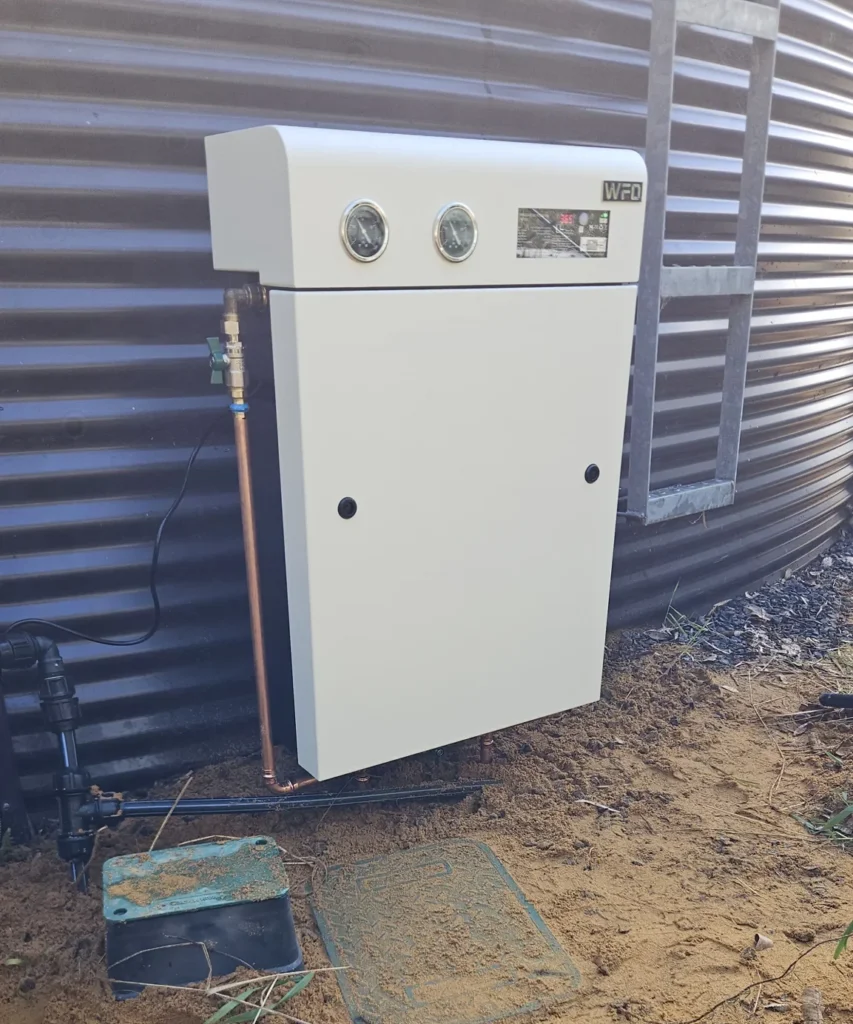
We installed an Ultra V Pro 3 on their property not long after. But what struck us most was how unsurprised we were. When it comes to rainwater tanks, a positive E. coli result is far from unusual. The research suggests it’s closer to the norm.
How common is E. coli in rainwater tanks?
More common than most tank owners would guess. Australian researchers have been testing household rainwater tanks for decades, and the results are remarkably consistent:
- A 2025 review pulling together around 25 years of Australian research found E. coli above the drinking water guideline in 49% of tank water samples.
- In Adelaide, a 12-month study of 53 household tanks found E. coli in 53% of them. Even the seven tanks fitted with filters tested positive on multiple occasions.
- In South East Queensland, researchers found E. coli at 58% of household taps fed from rainwater tanks. That’s water coming out of the kitchen tap, not just sitting in the tank.
- In South Australia, a larger study cited in national rainwater tank guidance found E. coli in 30% of 974 samples.
The numbers vary from study to study, but the message doesn’t: a big share of Australian rainwater tanks contain E. coli at any given time.
Where does it come from?
Rain itself is about as clean as water gets. The problem is everything it touches on the way into your tank.
National health guidance on rainwater tanks lists the usual suspects: droppings from birds, possums, lizards, mice and rats, plus dead animals and insects in gutters or inside the tank itself. Every time it rains, whatever has built up on your roof and in your gutters gets washed straight in.
For South West properties surrounded by bush, peppermints and marri, that’s a lot of wildlife sharing your roof. Possums in particular are a known problem. In one Queensland study, 60% of possum droppings tested carried Campylobacter, a common cause of gastro, along with 24% of bird droppings.
Leaf litter breaking down in gutters, sediment building up on the tank floor, and warm summer temperatures all help bacteria survive once they’re in.
Why E. coli matters (and why it’s not the whole story)
Most strains of E. coli are harmless. So why does a positive result matter?
Because E. coli is an indicator. It lives in the gut of warm-blooded animals, so finding it in your water means animal faecal matter has found its way in. Where E. coli goes, other disease-causing organisms can follow.
That’s exactly what researchers have found:
- In South East Queensland tanks, 48% of E. coli tested carried genes linked to disease-causing strains, including the types behind serious gastro.
- The same research team found Campylobacter at 21% and Giardia at 13% of household taps fed from tanks.
- A study of 100 Adelaide household tanks published in September 2026 found Campylobacter in 13%, Salmonella in 10% and Shigella in 3%. Two-thirds of those households were using their tank water for drinking and cooking.
That’s why the Australian Drinking Water Guidelines set the bar at less than one E. coli per 100 mL. In other words, it shouldn’t be detectable at all. As Tasmania’s health department puts it, not all E. coli causes illness, “but the potential to become unwell remains high.”
What does WA Health say?
The WA Department of Health’s advice is fairly relaxed. It says rainwater in rural areas is “usually safe to drink unless it has been contaminated or stored improperly,” and notes that routine testing of household tanks “is not normal practice.”
Its focus is on prevention: keep the roof, gutters and downpipes clean, use a first flush diverter, keep the tank covered and screened, and inspect for sediment every two to three years. If a tank is contaminated, it recommends dosing with pool chlorine.
That’s all good advice, and it’s worth following. But it relies on every tank owner keeping on top of every gutter, every screen and every possum, all year round. The research shows that in practice, around half of tanks still end up with E. coli in them. And without a test, you have no way of knowing which half you’re in.
Should you be worried?
It’s worth keeping this in proportion. Plenty of people drink tank water for years without getting sick, and national guidance notes that a South Australian study found no difference in gastro rates between children drinking rainwater and children drinking mains water.
But the risk isn’t the same for everyone. Health authorities specifically flag that babies and young children, older people, pregnant women, and anyone with a weakened immune system should talk to their doctor about the risks of untreated rainwater. A bout of Campylobacter or Salmonella that an adult shakes off in a few days can hit a toddler or an elderly parent much harder.
And there’s a simpler point: if you’ve never had your tank water tested, you’re guessing. The Yallingup family had five years of “it’s fine” before the test told them otherwise.
How to make your tank water safe
1. Get it tested
A proper water test is the only way to know what’s actually in your tank. Use a NATA-accredited laboratory, as WA Health recommends, and ask for a microbiological test that includes E. coli. Your local council’s environmental health team can also point you in the right direction. If the result comes back clear, great. If it doesn’t, you’ll know exactly what you’re dealing with.
2. Keep up the maintenance
Clean your gutters at least twice a year (more often if you’re surrounded by trees), trim overhanging branches to keep possums off the roof, check your first flush diverter and mesh screens, and have the tank checked for sediment every two to three years.
3. Put a treatment barrier in place
Maintenance reduces the risk. It doesn’t remove it. Boiling works, but it isn’t practical for a whole household, and chlorinating a tank is a fix for contamination you already know about, not ongoing protection.
That’s why we recommend the Ultra V Pro 3 for tank and bore water homes. It combines multi-stage filtration with UV sterilisation, which treats every drop of water as it enters the house, neutralising bacteria and viruses without adding chemicals. It’s stainless steel, backed by a 10-year warranty, and installed by a licensed local plumber.
For the family in Yallingup, it means clean, safe rainwater at every tap, without having to wonder what the next test might show.
The bottom line
E. coli in rainwater tanks isn’t rare, it isn’t a sign that someone’s done something wrong, and it isn’t something you can see, smell or taste. It’s what happens when water runs off a roof shared with birds and possums. The fix is straightforward: test, maintain, and treat.
Tank water tested positive, or want peace of mind? Call Danny on 0452 259 399 or get a quote for honest advice on treating your tank water from a licensed WA plumbing contractor (PL8180), across Dunsborough, Busselton, Yallingup, Margaret River and surrounds.
Sources: Zanotto & Senevirathna (2025), “Maintaining microbial and chemical quality in Australian rainwater tanks”, Environmental Challenges; Chubaka et al. (2018), “Microbiological values of rainwater harvested in Adelaide”, Pathogens; Ahmed et al. (2011, 2012), Applied and Environmental Microbiology (South East Queensland studies); Adelaide University and Flinders University rainwater tank study, Journal of Environmental Management (September 2026); enHealth, Guidance on the use of rainwater tanks; WA Department of Health, Water tanks on your property (HealthyWA); Tasmanian Department of Health, E. coli in drinking water; NHMRC, Australian Drinking Water Guidelines.
Dunsborough Water Filtration supplies, installs and maintains whole-home water filtration systems across Dunsborough, Busselton, Yallingup, Margaret River and the South West. Licensed WA Plumbing Contractor PL8180.
On this page
About the Author: Danny Tuffin
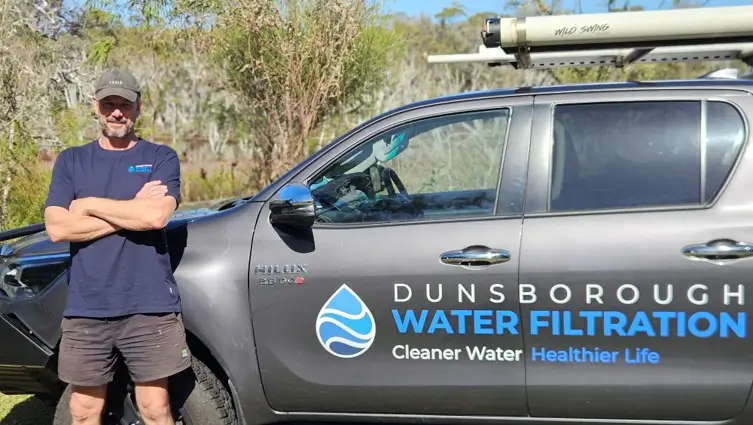
Danny Tuffin is the founder of Dunsborough Water Filtration and a fully licensed WA Plumbing Contractor (PL8180), authorised in Water Supply, Sanitary and Drainage Plumbing.
After building a reputation across the South West through Tuffin Plumbing & Gas for reliable service and straightforward advice, Danny launched Dunsborough Water Filtration to give local families a professional, owner-operated alternative to the big national water filter companies.
He specialises in whole-home Vortex Pro 3 installations and brings hands-on knowledge of the region’s water – from town supplies to rural bores and rainwater tanks – across Dunsborough, Busselton, Yallingup, Margaret River and surrounds.